
________________________________________________________________________________________________________________
SOUTHWELL MINSTER
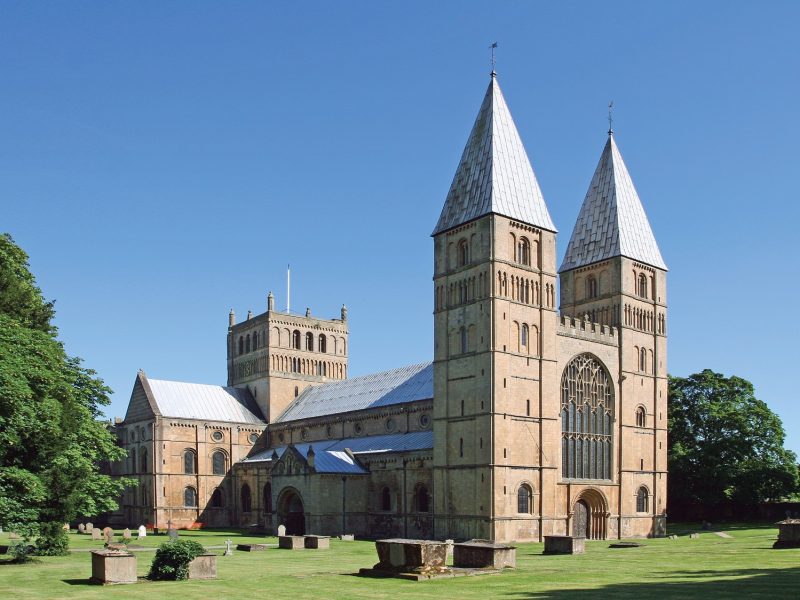
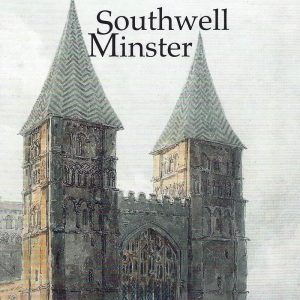
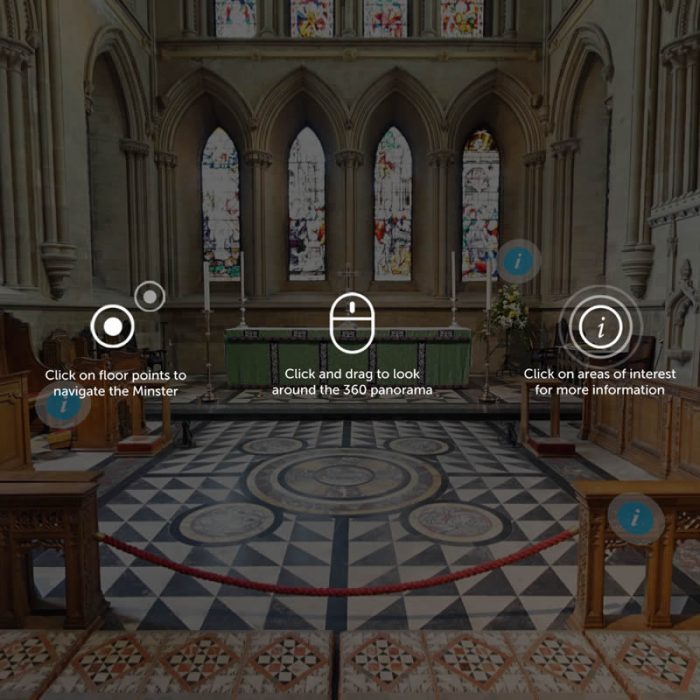
Welcome to this website and the glimpses it offers of our wonderful Cathedral and Minster. Said by many to be the best kept secret among the forty two English cathedrals it is a gem. The Cathedral and Parish Church of the Blessed Virgin Mary is popularly known, as it has been for centuries, as ‘Southwell Minster’. Although Christian worship has taken place on this site for over 1000 years, the present Romanesque building celebrated its commencement, 900 years ago, in 2008.
Southwell Minster became the Cathedral Church of the Diocese in 1884. As the Cathedral Church of Nottinghamshire it seeks to serve diverse communities from the farms of the Dukeries in the north, with mining and ex-mining towns, and in the south the colourful city of Nottingham with its industry, universities and teaching hospitals of international repute. This stunning place still brings visitors to their knees in wonder and awe to glimpse the glory of God. The thriving community here at the Minster invites you to come and see Southwell Cathedral for yourself and enjoy its beauty and peace. You will be most welcome.
The Very Reverend John Guille Dean of Southwell

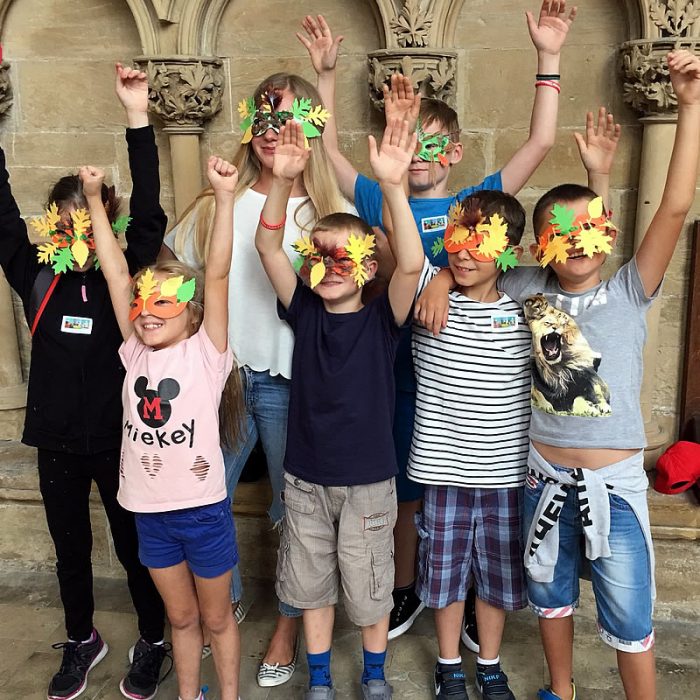
High Summer Fun at Southwell Minster
Kenneth Bernard Beard MA (Cantab), MusB, FRCO (CHM), ARMCM
9 June 1927 - 9 July 2010
In a sleepy Nottinghamshire town, Kenneth Beard served, from dawn to dusk, the ancient Cathedral Church. For twenty-nine years, he was Rector Chori – a title unique among Britain’s cathedrals – of Southwell Minster, where he worked to the glory of God every day of the week. It was a vocation he undertook with love, humility and devotion, while firmly demanding the very best of the men and boys of the choir.
Born in Royton, Lancs, in 1927, Kenneth was the son of a Manse – his father being the Methodist Minister. He attended Kingswood School, Bath, and studied at the University of Manchester and the Royal Manchester College of Music from 1946-9, taking the degree of Mus.B. in 1949. From Manchester he went up to Cambridge as organ scholar of Emmanuel College, where he read for part II of the music tripos. He took the Cambridge degrees of BA (1951) and MA (1955), also achieving Fellowship of the Royal College of Organists in 1949 and the ChM (Choirmaster) diploma in 1954.
Excused National Service because of a serious eye complaint (which left him blind in one eye), Kenneth took his first appointment as choirmaster and organist of St Michael’s College, Tenbury Wells in Worcestershire in 1952. There he had charge of the music during the college’s centenary celebrations. The school’s reputation for music was very high, and his conducting of the première of Benjamin Britten’s Antiphon – in the presence of the composer – strengthened his reputation as an extraordinary musician.
Yet Kenneth’s demand for musical excellence was balanced by his endeavour to shape his pupils into confident, competent young men. His reputation, therefore, was not simply based on his musical ability, but his care and concern for others – a gift which has lived long in his pupils, whether or not they have gone on to be, as many have, professional musicians. For boys experiencing family problems, bereavement, or the familiar distresses of growing up, Kenneth was patient and kind as a listener, but also firm and wise as a mentor. Quite intuitively, he struck a healthy balance between compassion and strength, always encouraging pupils to deal honestly with their difficulties, and to emerge as more rounded and whole personalities.
Moving to Southwell in 1959, Kenneth assumed the onerous responsibilities of two jobs, both of which had previously been full-time posts: as Rector Chori, he directed the Cathedral’s music; as Head of Music at the Minster Grammar School, his high musical standards and gifts of nurture were to benefit many hundreds of pupils. Not only did he manage the two jobs very successfully, he also found the time and the energy to make a wider contribution to school life, including taking part in the annual school summer camp. A particular highlight, and one which Kenneth would reflect on with warm satisfaction for many years afterwards, was a performance in 1976 of Haydn’s The Creation, involving all the school’s musical forces. It was at Southwell that Kenneth developed his gift for encouraging the latent musical skills of the pupils, spotting and developing the potential of boys of whom more experienced teachers despaired. In 1984 he directed the music at the service of the Royal Maundy, held in Southwell Minster during the centenary year of the foundation of the diocese.
Kenneth, who never married, had a constant companion in a succession of dogs, which, being large and barely trained, would invariably lead the way on walks, with their master’s arm far outstretched. Later in his career, a house in Ashford-in-the-Water, Derbyshire, provided easy access to the walks and the scenery he loved, and became a place of hospitality and retreat on the days off which he eventually allowed himself.
Retiring from Southwell in 1988, Kenneth moved to Mold, North Wales, to become organist of the parish church. From there he moved to Baslow, Derbys, where he lived with his late sister, Muriel.
He greatly valued his many friends, and remained in close touch with a large number of former pupils, happily offering generous support. As a man of deep faith and exceptional musicality, Kenneth never sought the limelight or reward beyond a job well done. However, in 2008 he was awarded the Cross of St Augustine by the Archbishop of Canterbury in a ceremony at Lambeth Palace, in recognition of his service to church music – and to the church musicians in whom he took a great interest. On the day of the presentation, Kenneth, in typically self-effacing style, expressed his deep admiration for the achievements of his fellow recipients, while downplaying his own. The Archbishop’s citation, however, left no one else in any doubt about the magnitude of Kenneth’s legacy: it told a story of fine musicianship, of devoted service, and of the quiet but determined living out of deeply-held Christian principles.
A mark of the esteem in which he was widely held was that in his final years, during a long illness, he lived in Retford, Nottinghamshire, in the care of the family of two of his former Southwell choristers.

Dr. Robert Ashfield, Sir David Lumsden, Kenneth Beard and Paul Hale
at a Southwell Old Choristers' reunion, 1991
Do you want to ask about holding a wedding or a baptism at Southwell Minster?
Please contact the Canon Pastor's PA, Mrs Dilys Carby, on 01636 812649 dilys@southwellminster.org.uk
Booking a guided tour of Southwell Minster
Tours of Southwell Minster, with a trained Steward, can be pre-booked via Mrs Nikki Smith in the Minster Office office@southwellminster.org.uk 01636 812649. If a number of visitors are coming informally and do not wish a guide, we still urge you to contact Mrs Smith to make sure there is no event, or rehearsal, in the Minster that might clash with and detract from your planned visit. An excellent audio tour is available for individual visitors to hire from the information desk.
Hiring Minster premises
Our historic Great Hall, Trebeck Hall and audio-visual room are all available for hire. Please contact Mrs Smith about this, too. office@southwellminster.org.uk or 01636 812649
We warmly thank all photographers whose work is used on this website, particularly Richard Jarvis and Chris Knapton